
Enterprise Digital Hub(EDH)
I led end-to-end product design for an internal platform centralizing strategy, standards, training, and news for 30+ business units and their external agencies. With no existing playbook for a hub like this at BD, I had to define what to build first — the old, fragmented process cost agencies weeks per engagement just to get oriented, and this hub cut that to days and was later adopted as BD's standard template for future digital initiatives.
My Role: UX Designer (end-to-end, from research to prototype)
Timeline: 6 months
Team: Marketing stakeholders, external dev team (TGS), agencies

Problem & Goal

Every business unit was solving
the same problem alone
-
• Each business unit built digital products independently — inconsistent standards.
• External agencies lacked guidance — duplicated work and longer timelines.
• Developers needed clear specifications for faster handoff.
Goal: rather than solve every symptom at once, I scoped the hub around the four things agencies asked for repeatedly — strategy, standards, training, and communication tools — to unify practices and accelerate execution.
Why it mattered
Every cycle of inconsistency meant agencies re-learning brand standards from scratch, business units shipping off-brand assets, and BD's marketing team fielding the same guideline requests over and over — a cost that compounded as the org scaled past 30 business units..
Users & research insights
What stakeholder interviews surfaced
Method: 12 semi-structured interviews across 3 stakeholder groups (business unit teams, external agencies, TGS developers), synthesized via affinity mapping into 4 recurring pain points.
-
Business unit teams — struggled with inconsistent practices.
-
External agencies — wasted time requesting guidelines repeatedly.
-
TGS developers — needed component references for faster programming.
KEY INSIGHT
"Each team communicated differently with external agencies, leading to repeated training and inconsistent quality." This shaped the design around centralization, role-specific access, and streamlined communication.



Tom, brand manager on a regional business unit
Tom runs 3–4 agency briefings per quarter. Because there was no single source of truth, he re-requested the same guidelines every cycle — and twice briefed an agency off an outdated deck.
Persona
Design response
Rather than target an arbitrary click count, I mapped Tom's actual briefing workflow and surfaced standards at the two moments he got stuck — before scoping a brief, and before reviewing agency deliverables.
Reference research
How, not just what
Instead of comparing feature lists across 10 sites, I analyzed how each one handled content discovery.
Finding: McKinsey, BCG, and NN/g all lean on strong information architecture and contextual navigation over global search — appropriate when content is shallow-and-wide rather than deep-and-searchable.
Applied to EDH: the initial library was under 50 top-level documents, well within range for IA alone, so I deferred global search to a v2 candidate as the library scales.

Information architecture
Structure validated against Tom's real path
I grouped content into six task-based areas — not mirroring the org chart — since stakeholders searched by what they needed to do (brief an agency, check a spec, get certified), not by department. A new Spotlight News section was added to surface innovation and team wins. Validated with a round of card sorting across 6 stakeholders (2 per group) — 83% agreement on top-level groupings.
Homepage
-
What we do
-
Spotlight news
Standards & guidelines
-
Campaign
-
Design
-
Accessibility
Vision & roadmap
-
Digital strategies
-
Expansion roadmap
Technology & tools
-
Product catalog
-
Domains & microsites
Training
-
Most popular
-
Certification
Ask us / FAQ
-
Team members
-
Useful links
What changed between v1 and v2
Tested with 5 stakeholders via moderated walkthroughs. Biggest change: Training was originally a footer link — 4 of 5 participants failed to find it, so it moved to a top-level nav item before moving into high fidelity.


From wireframe to system


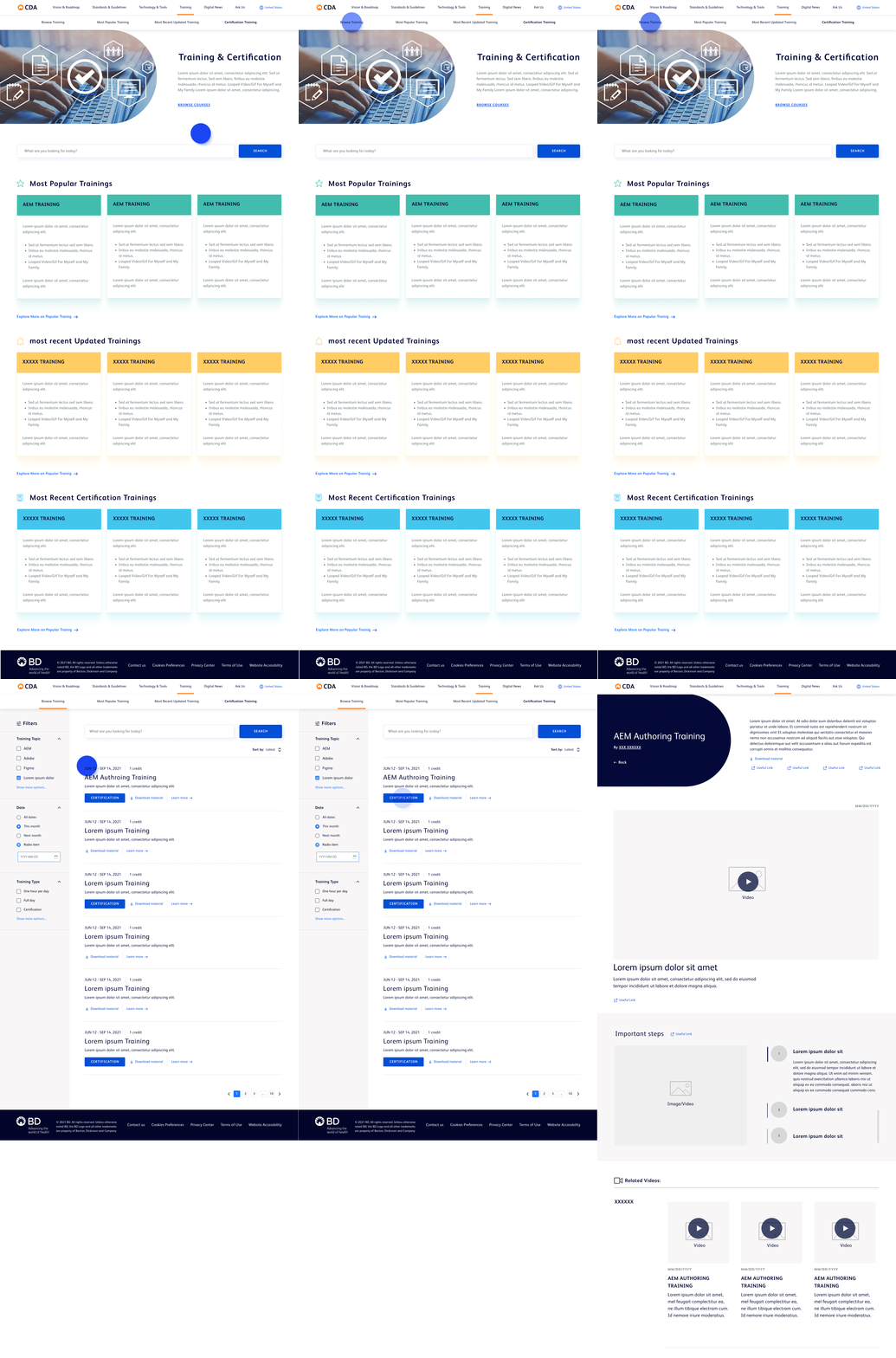
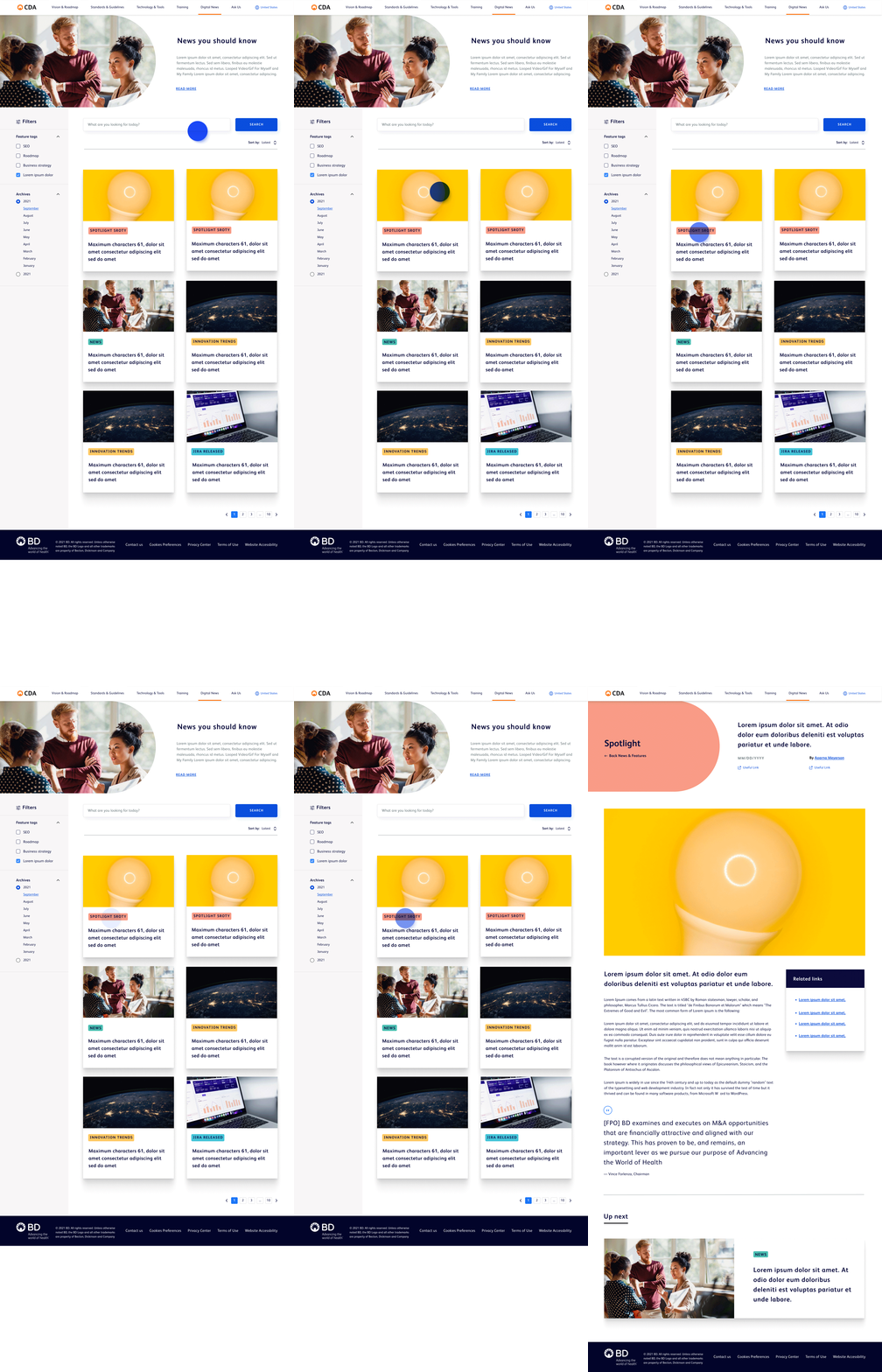

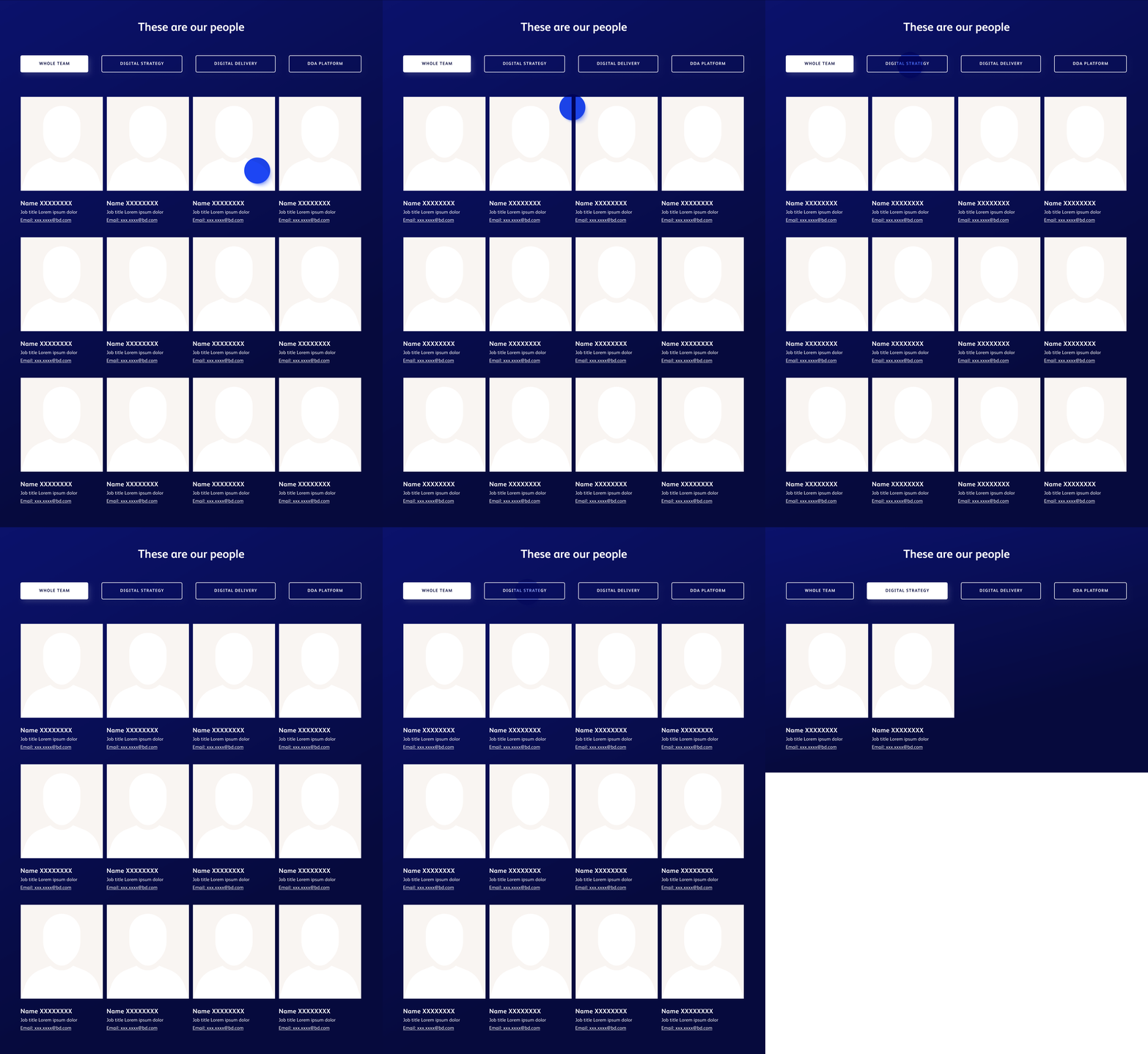
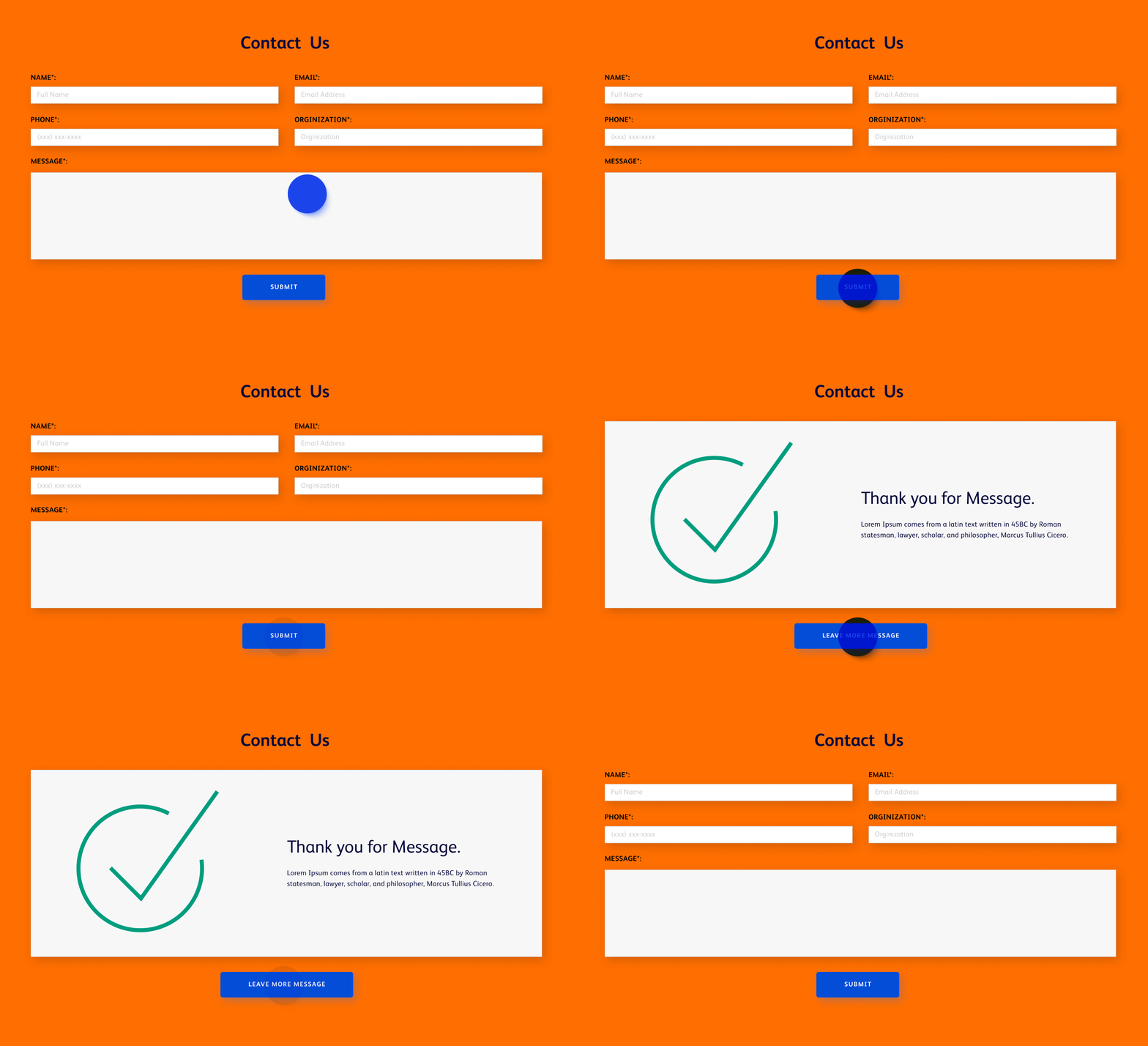
Color system pulled from company's existing brand palette so the hub feels native across all 30+ business units; the teal/orange accent pairing distinguishes interactive elements from static content regardless of how content-dense a given team's pages get.
Shipped and adopted org-wide
40%
Reduction in agency onboarding time
90%
Task completion (10 users, 3 teams)
1
Adopted as BD's standard hub template
Reduced agency onboarding time by 40% — driven directly by consolidating standards that previously lived across 5+ disconnected folders into one IA-navigable hub. The role-based IA let users skip an average of 2 irrelevant sections per task versus the old flat file structure.
What I'd change
I'd run a second validation round after the IA change to confirm it held up at scale, and I'd prioritize search sooner — once the library passed 50 docs, informal feedback showed users wanted it earlier than the planned v2.